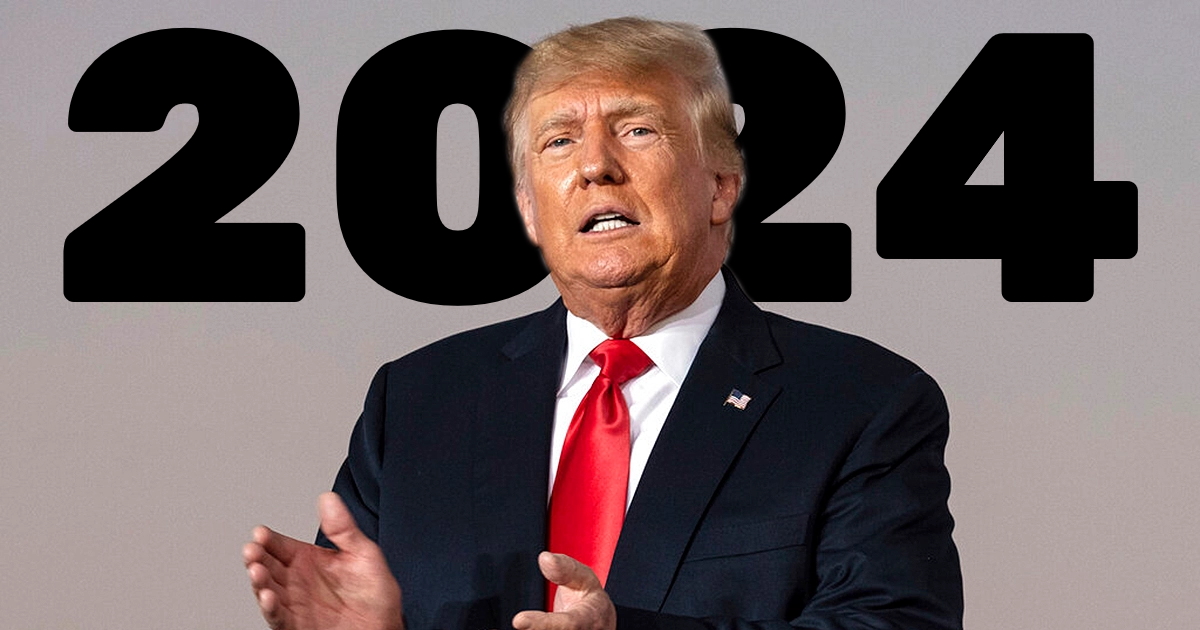
Why Biden won’t win again in 2024

One of the things that I brag about most is that I called the 2020 election correct in every state (and DC, although not once in its voting history has DC voted Republican) aside from Georgia and Arizona, which both flipped from Trump to Joe Biden. I predicted it’d be the first election since 1960 that Ohio voted differently to the final result, and I predicted a narrow win for Biden overall. Whilst I won’t claim that I got it exactly right – because I didn’t – I will offer my opinion on the 2024 election.

The electoral college in America pretty strongly favours the Republicans. In fact, so strongly that no Republican President has entered office by winning the popular vote since George H. W. Bush in 1988. Following Bush Sr., America had eight years of Clinton, then Bush Jr. won without the popular vote. Whilst he did win the popular vote for his second term, he did so having entered the Presidency without it. Obama followed Bush Jr. for eight years, then the world was burdened with Trump who entered office despite Clinton winning the popular vote. This means analysis needs to focus on the electoral college and therefore on a state-by-state basis. If we only took the popular vote into account, we’d probably have had a Democrat President since 1992 – national opinion doesn’t decide the President.

This makes swing states in America particularly important. My 2020 prediction was based on the rust belt voting for Biden, but also on the high turnout I expected amongst left-wing voters, given that Biden had one of the most impressive rebranding efforts I’ve ever seen from a candidate: he went from pale, male and stale when against Bernie and Buttigieg to offering significant policy changes, a shift away from Trump, and the first female and ethnic minority Vice President. This was all against the backdrop of Trump’s failures. It didn’t make a win inevitable, but it managed to turn out voters in cities like Philadelphia and Atlanta to the extent where Pennsylvania and Georgia were just won.

Biden was able to get the support of workers who’d been failed by Trump’s pandemic response or had family affected by it, as well as young progressives, without one group alienating the other. Put bluntly, Trump’s pandemic response was bad and Biden offered real hope. Now, Biden’s just as bad (the CDC have recently announced that isolation can end after 5 days without a negative test, and a rapid test is at least $10), and doesn’t live up to what he promised, so he’s likely to lose a lot of these groups. Young people won’t turn to Trump, so the edge in some states could be down to mobilising these. And, frankly, why should young people vote Biden when he’s failed to write off student loans? Social policy is the one thing keeping young people voting Biden – but even there, Biden promised 0 deportations in his first 100 days. He missed the mark by tens of thousands. Workers under Biden? They’ve kept their healthcare, but they did under Trump too. Put short, Biden has underwhelmed in the areas that made him win.

On top of this, there’s the fact that in American politics, the first 100 days are what matter, and no legacy was left of this. At this point it’s an assumption that Biden will lose the House in 2022, so the GOP will do all they can to make Biden look ineffective. This is going to harm his chances when it comes to the 2024 race. In other words, Biden’s failed to impress when the Democrats have had control of the Presidency, the House and the Senate. If the Democrats lose the House or Senate, Biden goes from bad to worse.

Of course, this is all based on the most likely scenario of the Democrats nominating Biden again, but the alternatives aren’t much better. Either nominate Kamala Harris, the most unpopular VP in modern history, or admit the administration has got it wrong and lose the incumbency advantage by selecting a third candidate, which is virtually unheard of in American politics. There’s no way of getting out of the Republican firing line. It’s either “Look at how Biden failed to keep his promises to America”, “You don’t want Kamala Harris as President”, or “Democrats can’t even trust themselves – why should you trust them?”, the latter of which will open up easy goals for the Republicans as they ask the nominee what they think of the current administration.

Biden had the opportunity to impress. He could have written off student loans, made rapid testing free, made Washington DC and Puerto Rico states (therefore giving them seats in both the House and Senate, which gives the Democrats an electoral advantage), expanded the Supreme Court, made healthcare more accessible, implemented gun control and police reform, and invested in huge social programmes to cut crime. He had the numbers to do whatever he wanted to do, so he’s the only one to blame. In fairness, his Build Back Better plan does deliver on some things (and might be Biden’s last shot at saving the Democrats’ 2024 dreams), but his choices in the first 100 days might cost America four more years of political stability, and those four years might prove fatal with ill judged foreign policy and populist domestic supporters. When he’s not up for re-election, he may be even more reckless too. It’s his last four years anyway, what’s he got to lose?

The beginning of the end for Johnson, and why the Conservatives could be doomed at the next election

If the opposition manages to sustain a good attack line, this will be the end for Johnson. It is significantly more important than the fact that the Prime Minister probably shouldn’t have attended a party. It’s the fact that there were countless mistakes – if you can call them mistakes – caused by a culture of lying, arrogance, and refusal to follow the law. Any decent Prime Minister would have said “I should not have done this and I will step down” for the sake of the country. Any bad Prime Minister would have done the same but for their party, similar to Matt Hancock. Johnson is neither of those, and that’s what makes him so embarrassing.

There are three options for the Conservatives in the next election, likely to be in 2023 or 2024. Boris Johnson could stay leader and there could be too few rebellions to trigger a vote of no confidence within the Conservative Party, which isn’t unlikely given that Labour’s constant infighting over the last couple of years has made them look incredibly weak and divided, and the Conservatives don’t want the same fate. Boris Johnson expelled all MPs that did not agree with him on the issue of Brexit, as unity was so important to the party – so don’t be surprised if the Tories don’t rebel. If Johnson does stay leader, the opposition parties and hopefully the media will have a fantastic opportunity for some good old fashioned character assassination. Is the person who couldn’t follow his own rules and couldn’t be honest about it the person you want leading you through the next crisis, and can you trust them to make good decisions on behalf of the country when they consider themselves exempt?

The second option is that Boris Johnson is replaced as Prime Minister. I consider this the most likely. Potential candidates for his replacement will vote for replacing him but only if they believe it is likely to pass, given their careerist goals but also that they will want to stand on a platform, both internally and nationally, that they’re not like Johnson, whilst seeking to balance this with being supportive of a government which they want to look successful. Their electoral chances will be ruined if the front bench votes against Johnson who survives the vote. If Johnson is replaced as Prime Minsiter, Labour also have a fantastic opportunity for campaigning against the new leader: “In 2015, the country voted Cameron and got May. In 2017, the country voted May and got Johnson. In 2019, the country voted Johnson and got Sunak/Truss/Patel. They can’t trust that a Conservative Prime Minister is up for the job.” They’ll also get the chance to point out that many current Tory MPs will have supported Johnson as a vote of no confidence will force them to pick a side or abstain, and that there’s nothing stopping a party with such a corrupt culture from replacing the new PM two years down the line with someone more corrupt as happened with Johnson replacing May. It’ll be an attack on the party which supported Johnson so much and the risks re-electing that party brings with it, rather than an attack on the new leader.

I believe this will happen before the second half of 2022 due to the process involved. A Parliamentary vote of no confidence (which triggers a general election if no new government is formed within 14 days) won’t pass against Johnson if it didn’t pass against May, and the Tories would struggle to find a coherent leader in time for the 14 day general election leaving Boris Johnson as their candidate. This means it would have to be done through a Conservative Party vote of no confidence, where enough Conservative MPs (15%, currently 55 MPs) must write to the Chairman of the 1922 Committee to ask for such a vote. MPs are only going to write at such a time when they believe the party to be at risk because of the leader, and trailing in polls is not enough to cause this. If Johnson survives the local elections in 2022, it means the scandals have passed without enough outrage from Tory MPs to remove him and they won’t remove him with no new significant scandal. In other words – this set of scandals will end him quickly with the help of the North Shropshire by-election this Thursday and potentially the 2022 local elections, or it won’t end him at all.

The third option probably looks a bit more appealing to a lot of senior Tories – keep the government looking strong as long as possible without ousting Johnson as Prime Minister, but standing a new leadership candidate in the 2023/24 election. On the face of it, this looks good: suppress the scandals as much as possible, say you’re delivering on the people’s priorities instead of playing politics, and dump the liability without making a big deal out of it in the middle of a term. However, this raises problems for the next leader. Any attacks on Johnson can then be carried out on the party as a whole. The leader will be forced into criticising Johnson after standing by him for years, or will appear soft on Johnson’s corruption when it will likely be one of the main talking points of the next election. And this won’t just be a problem that the leader faces – the entire party will be accused of standing by a corrupt leader until it’s elecorally convenient for them, and it will be hard for them to wiggle out of this one.

Whichever of the three options happens, it could spell significant danger for the Conservatives at the next election as Starmer’s blandness turns into his biggest asset. It just relies on Labour running a good campaign against the Tories and knowing that it’s an election which will be won on attack, rather than left wing policy. Once Labour have a term proving themselves as competent governors once again, they can use the following election to stand on popular left-wing platforms such as renationalisation.