Bernie started a revolution: that’s where he went wrong

I knew of Bernie Sanders in 2016, though I wasn’t really old enough to be engaged in American politics back then so I couldn’t offer an opinion. In February 2020, I was throwing my weight behind him. Pictures of massive rallies full of people – Americans – supporting democratic socialist policies filled me with hope. He was America’s chance for healthcare that made sense, for university that didn’t throw people into hundreds of thousands of dollars of private debt, and for real action on climate change. It was the first time in my lifetime where I thought “Oh my god, things could really change in America”.

That’s kind of the problem with Bernie, too. Not the policy, but the messaging. He hit the nail on the head when it came to young progressives like me and many others – anger at the system which translated into radical, transformative change. That’s why I was so passionate and hopeful. Throw the same messaging at the lower middle class in the rust belt, and you’ll probably find that people working in car manufacturing who have just barely got health insurance won’t respond too fondly to the rhetoric of “let’s rip up the system”.

A middle ground is hard to find. My idea of the best middle ground is keep the anger, but don’t direct the anger at capitalism or cars or an abstract “the system”. Direct it at not doing the common sense thing. Keep the anger for the young progressives, but don’t talk about healthcare as some kind of revolution. Talk about healthcare in familiar terms. In practice, this means straying away from “We must defeat them” language (which I just copy and pasted directly from Bernie’s website), and towards “It’s common sense – we can fully insure everyone at half the cost.” Everyone knows common sense, and Americans are familiar with being fully insured.

Bernie had the right ideas. American health care makes no sense. It’s high cost at about 2x what most other MEDCs spend per capita, low efficiency given the bureacracy, and doesn’t produce great outcomes with a lower life expectancy than the UK, Germany, France, New Zealand, Canada, Japan, and 33 other nations. Based on WHO data the US is 40th in life expectancy – the UN Development Programme puts it 37th, and the CIA’s World Factbook places America at number 54. When it comes to spending it’s more shocking – in 2019, the UK spent $4,653 on healthcare per capita. The United States? $11,072.

Health expenditure per capita by major nation. Source: OEDC.

I could talk for hours about why healthcare makes no sense in America, but that’s not the point of this. A quick look at a bar chart shows it doesn’t make sense. The problem is why Bernie couldn’t get this message to cut through. Policy doesn’t need to change, messaging does. The UK faces a similar problem with Labour although it’s not compounded by the Electoral College – Keir Starmer is criticised for speaking in front of a flag of the country he wants to lead, despite the fact that Bernie Sanders did this consistently with little criticism from the left. If the Democrats (and Labour) want to win in 2024, they need someone who can win the hearts of the young and the common sense of the swing voters. Anger and common sense aren’t mutually exclusive.
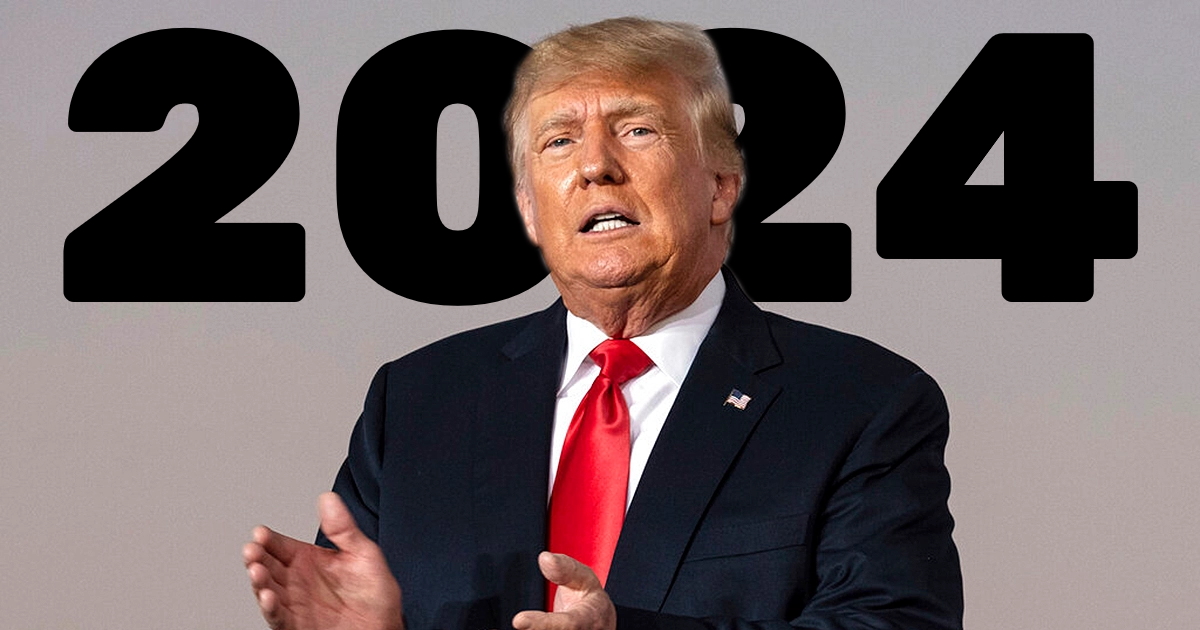
Why Biden won’t win again in 2024

One of the things that I brag about most is that I called the 2020 election correct in every state (and DC, although not once in its voting history has DC voted Republican) aside from Georgia and Arizona, which both flipped from Trump to Joe Biden. I predicted it’d be the first election since 1960 that Ohio voted differently to the final result, and I predicted a narrow win for Biden overall. Whilst I won’t claim that I got it exactly right – because I didn’t – I will offer my opinion on the 2024 election.

The electoral college in America pretty strongly favours the Republicans. In fact, so strongly that no Republican President has entered office by winning the popular vote since George H. W. Bush in 1988. Following Bush Sr., America had eight years of Clinton, then Bush Jr. won without the popular vote. Whilst he did win the popular vote for his second term, he did so having entered the Presidency without it. Obama followed Bush Jr. for eight years, then the world was burdened with Trump who entered office despite Clinton winning the popular vote. This means analysis needs to focus on the electoral college and therefore on a state-by-state basis. If we only took the popular vote into account, we’d probably have had a Democrat President since 1992 – national opinion doesn’t decide the President.

This makes swing states in America particularly important. My 2020 prediction was based on the rust belt voting for Biden, but also on the high turnout I expected amongst left-wing voters, given that Biden had one of the most impressive rebranding efforts I’ve ever seen from a candidate: he went from pale, male and stale when against Bernie and Buttigieg to offering significant policy changes, a shift away from Trump, and the first female and ethnic minority Vice President. This was all against the backdrop of Trump’s failures. It didn’t make a win inevitable, but it managed to turn out voters in cities like Philadelphia and Atlanta to the extent where Pennsylvania and Georgia were just won.

Biden was able to get the support of workers who’d been failed by Trump’s pandemic response or had family affected by it, as well as young progressives, without one group alienating the other. Put bluntly, Trump’s pandemic response was bad and Biden offered real hope. Now, Biden’s just as bad (the CDC have recently announced that isolation can end after 5 days without a negative test, and a rapid test is at least $10), and doesn’t live up to what he promised, so he’s likely to lose a lot of these groups. Young people won’t turn to Trump, so the edge in some states could be down to mobilising these. And, frankly, why should young people vote Biden when he’s failed to write off student loans? Social policy is the one thing keeping young people voting Biden – but even there, Biden promised 0 deportations in his first 100 days. He missed the mark by tens of thousands. Workers under Biden? They’ve kept their healthcare, but they did under Trump too. Put short, Biden has underwhelmed in the areas that made him win.

On top of this, there’s the fact that in American politics, the first 100 days are what matter, and no legacy was left of this. At this point it’s an assumption that Biden will lose the House in 2022, so the GOP will do all they can to make Biden look ineffective. This is going to harm his chances when it comes to the 2024 race. In other words, Biden’s failed to impress when the Democrats have had control of the Presidency, the House and the Senate. If the Democrats lose the House or Senate, Biden goes from bad to worse.

Of course, this is all based on the most likely scenario of the Democrats nominating Biden again, but the alternatives aren’t much better. Either nominate Kamala Harris, the most unpopular VP in modern history, or admit the administration has got it wrong and lose the incumbency advantage by selecting a third candidate, which is virtually unheard of in American politics. There’s no way of getting out of the Republican firing line. It’s either “Look at how Biden failed to keep his promises to America”, “You don’t want Kamala Harris as President”, or “Democrats can’t even trust themselves – why should you trust them?”, the latter of which will open up easy goals for the Republicans as they ask the nominee what they think of the current administration.

Biden had the opportunity to impress. He could have written off student loans, made rapid testing free, made Washington DC and Puerto Rico states (therefore giving them seats in both the House and Senate, which gives the Democrats an electoral advantage), expanded the Supreme Court, made healthcare more accessible, implemented gun control and police reform, and invested in huge social programmes to cut crime. He had the numbers to do whatever he wanted to do, so he’s the only one to blame. In fairness, his Build Back Better plan does deliver on some things (and might be Biden’s last shot at saving the Democrats’ 2024 dreams), but his choices in the first 100 days might cost America four more years of political stability, and those four years might prove fatal with ill judged foreign policy and populist domestic supporters. When he’s not up for re-election, he may be even more reckless too. It’s his last four years anyway, what’s he got to lose?